Published: October 31,2016
Hurricane Matthew paralleled the Southeast coast Oct. 6-9, dumping over a foot of rain from parts of Georgia to the Carolinas and southeastern Virginia, along with deadly storm-surge flooding and damaging wind gusts. In the three weeks since, it hasn't rained in much of the Southeast.
Not that one would want a deluge to trigger flooding in a drought, but the rain from Matthew didn't exactly overlap well with the rapidly worsening drought area in the Tennessee Valley, just to the west.
(MORE: Hurricane Matthew Recap)
 Estimated rainfall from Matthew.
 Drought conditions across the Southeast as of Oct. 25, 2016 (data from U.S. Drought Monitor).
(MORE: South May Not See Much Relief from Drought This Winter)
Although 40 percent of the Southeast seems like a high amount to be under drought conditions, if it weren't for Hurricane Matthew at the beginning of October, the drought would likely be more widespread due to the lack of rain since then.
As fall progresses, the drought may continue to worsen based on current long-range outlooks, and it doesn't help that fall is also the driest season of the year climatologically.
(MORE: November Outlook)
The Southeast relies on spring and summer thunderstorms, as well as tropical systems, in the summer and early fall to pick up rainfall. Thunderstorm season, for the most part, has come to an end, and hurricane season officially ends Nov. 30.
 November precipitation outlook from The Weather Company, an IBM Business.
On the other hand, this dry spell has allowed coastal areas of the Southeast to dry out after Matthew ravaged the area in early October.
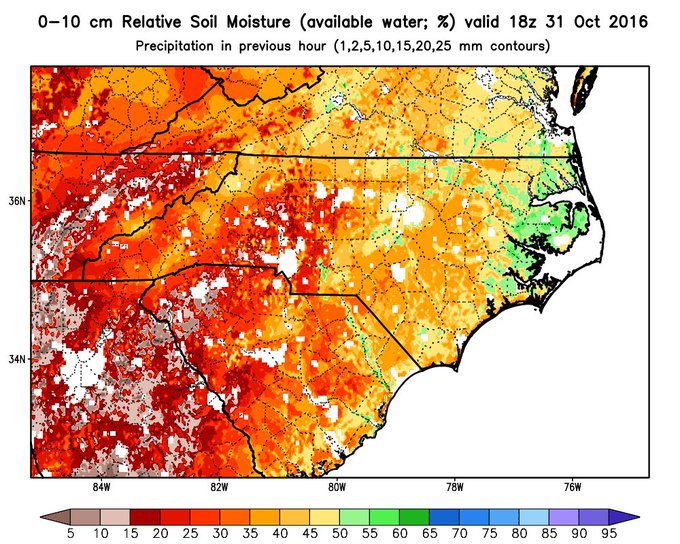

With 3+
weeks of no rain, you can see the soils are drying out across Southeast
NC and Northeast SC, nothing like the western Carolinas.

No comments:
Post a Comment